Showing posts with label charith. Show all posts

Thursday, December 11, 2014

Friday, June 20, 2014

Field Journals: Borneo Turtles

 A few years ago I travelled with my crew to the shores of Sarawak, Borneo. Off the western coast we sailed to a wonderful chain of little islands collectively called the Talang-Satang Marine National Park.
 
I had travelled all this way for one reason - well a number of reasons actually - but the number one priority was to time our visit to coincide with the arrival of female green turtles, coming ashore to lay their eggs.
Now I've witnessed this incredible phenomenon before on the shores of Western Sri Lanka, and back then it was Olive Ridley turtles coming ashore en-masse. 


But the magic of this occasion was heightened by the location itself: a tiny, single-beached desert island with a tiny patch of forest; surrounded by a ring of shallow coral reef and crystal clear water - paradise!


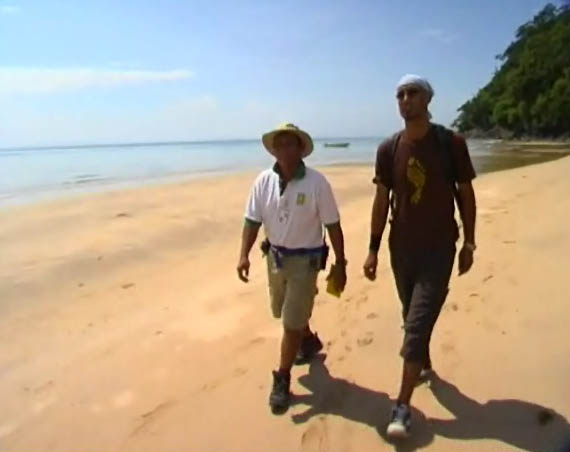
Christopher Kri and I explore
Sarawak's coastline


Fortunately our visit was timed almost to the last minute - the night we arrived, 7 turtles came ashore, and I was introduced to them by my guide, Christopher Kri, a local conservationist and all-round good bloke working for the Sarawak Forestry Board. Picture the scene: our tiny beach floodlit by a full moon; the waves sparkling under moonlight and not a sound from any of us, as we waited and waited.

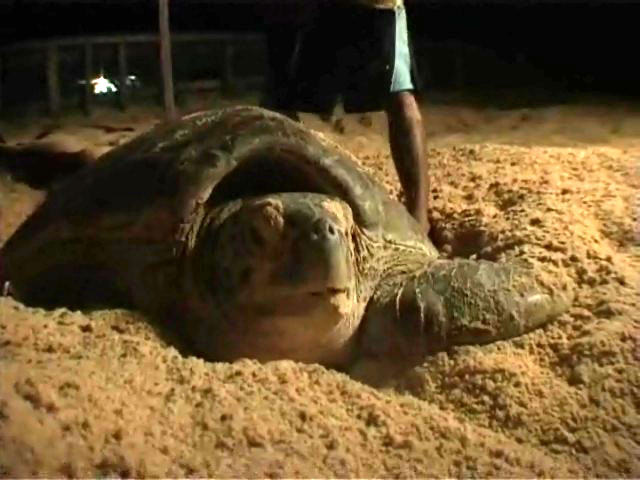
And then all of a sudden one of the rangers spots a dark hulk pulling itself out of the water and up onto the beach. At 3 o'clock in the morning, the Green Turtles had arrived.

Even though their progress on land was painfully slow and laboured, each turtle seemed to single-mindedly know where she was headed. Some traced their characteristic tractor-tread tracks directly to locations close to shore, whereas others meandered here and there all over the beach, spending the best part of two hours finding their desired spot. But sooner or later all seven settled down and started to dig their nests.


Turtles are easily disturbed during their ponderous movements along the beach. It doesn't take much for them to turn tail and head back to the safety of the water.

But once they settle and start their excavations, they go into an almost trance-like state, and its only then that the rangers come in for a closer inspection.


Its now that our friend Christopher comes into his own.

I seldom come across conservationists so deeply attached to their animal subjects, and Chris approaches each turtle with such reverence that you could almost imagine that he's welcoming back long-lost friends.

One turtle caught his attention in particular. Her tag number was 703/746 - but by the end of her long night, we were calling her Princess. Turns out that Princess is a repeat visitor - she has been returning to this island throughout her adult life to continue the cycle. Chris showed me the tag that had been attached to one of her front flippers all those years ago.


Chris introduces me to his beloved 'Princess'

After each of the turtles finished laying their clutch of eggs and burying this precious cargo under a cleverly concealed mound of sand, they retreated back to sea - hopefully to return in another 3 years.


Because of the highly endangered status of the species in this part of the world, each nest is transferred, as soon as the female departs, to the safety of an enclosed hatchery, where the eggs are protected from predators and poachers. Around 58 days later, the babies hatch, and the forestry staff give them a personal escort back to the sea - in hopes that they will return here to lay the foundations for the next generation, some thirty years later...

Its always an incredible privilege to witness these events in the wild. Every time I have such encounters I always find myself wondering if it'll be the last time I get to see these wonderful animals on their own terms, in their own territory. I guess its a common fear shared by conservationists and wildlife-lovers alike. Still with people like Christopher Kri working incessantly to ensure the welfare of his turtle wards, I still live with these tenacious threads of hope, that the turtles at least will continue to endure, inspite of the decimation they have suffered at our own species' hands.


A short clip of my encounter with Christopher and his turtles...
 

Tuesday, April 15, 2014

The Mountains of the Moon...

That's what it felt like - to be standing on a landscape, so spellbinding, and yet so alien - that it almost felt unreal to actually be there.


The steppes of Mongolia spread out like some vast cloak of grey and green over a gently undulating terrain. It seems almost too tidy, too well planned out - compact stands of pine trees cresting every mountain-top. Boulder-strewn riverbeds twist, serpentine, across the valley floors. Closely cropped pastures of grass cling to the ground - everything is in its right place, even the wildflowers grow in a pleasing kaleidoscope of colours.


Its the vastness of the place that gets to you though - you feel insignificant in the scheme of things, as your jeep struggles along a dirt track riddled with potholes. The sheer scarcity of people hits home, as you survey the horizon, and over a distance of say, twenty kilometres or so, only two or three homesteads lie huddled together, with a small herd of livestock scattered nearby. The characteristic yak-skin tents known as Gers are all that these people of the plains have to protect themselves from the elements. We are here during summer and there's already a chill in the air. But when winter hits, it does so with a vengeance - as temperatures fall below zero and the entire country becomes frozen beneath snow and ice.


Yes it is beautiful, but it is a lonely kind of beauty. Even for someone like me who is happy to escape from the boundaries of human society from time to time - this vastness could well become overbearing after a while. Its no wonder the Mongol people seek out each others' company in annual festivals and fairs. A sense of Community is a survival strategy in a place like this, where you could easily lose yourself in a constant landscape that stretches further than the eye can see and the mind can comprehend...

They are tough, these people - sturdy, enduring and tireless in the undertaking of their daily chores. As most of them are herders, horses take centre-stage in their lives. These wiry steeds are almost like living extensions of their riders. They move imperceptibly together across the plains in an ageless scene that could be centuries old. The Horse and the Rider - defining symbols of Mongolia.


We spent a precious few days in their company, and it wasn't long before all my sense of bravado about being able to live this kind of life, flew out of the window. They live right off the land, quite literally. And despite best-laid plans, every day is determined by the elements themselves. Only forward-planning gives these people a fighting chance, plus the ability to react fast to any given situation, be it positive or negative.

"Expect the unexpected" is an unspoken mantra, and the Mongolians' approach to life is to grab it by the throat and hold on for the ride.
Yes it is a beautiful life. But a life that they have to work hard for. The blood of the Khans certainly endures out here, in the vast empty plains...


Thursday, April 10, 2014

Fisherman's Moon

I have sailed the inbound sea. I have led a nomad's life, wandering with the great shoals; sleeping under Orion's light, singing the liquid song of my loss and my regret. For the sake of my brothers, I keep my mind from wandering to that dying horizon, where my lover awaits with the comfort of dusk.


The dunes afford no future. For my brothers and I are fishers of the sea. We have turned our blistered backs from the lie of the land. Far from the delicate embrace of women. Denied the saving grace of a child's cry. But we are sons of the sea. Children of the sand. And the ocean calls our name.


My possessions are few. A driftwood hut to shelter from the sky. A clay pot to cook my daily meal of rice and fish. A covering cloth to protect me from the fevers of morning and midday. And the tools of my trade. The cloaking net to imprison. The rusting knife to impair.

I entertain the cavorting egrets and the whispering winds. Dune water refreshes me, and saltwater goads my skin. But the pulse is strong within our hearts. From dusk until dawn, we will fight the sea. Until the waves surrender, and she delivers her bounty into our weathered hands. And we will grow old with our struggles. The sea will bend our backs. Broken like the great heads of the reef. Eroded like the jewelled cliffs of the abyss. As the waters recede and the debris of the ravaged sea washes in with the tide - there we will be, like so many empty shells and lost coral memories.


But now the tide favours us. And we set sail towards the night. I cast my net in this dreaming ocean, feeling the cool brine washing my dark hands; watching the fisherman's moon rise over me.


(In remembrance of Sri Lanka's southern coast fishermen, whom I spent some memorable days with, many moons ago...)


Wednesday, April 09, 2014

Magic In The Wilderness

It never ceases to amaze me how Nature continues to weave Her magic disappearing spells on us, even in this age of mass deforestation and urbanization.

As species go extinct as fast as the seconds hand on a clock, so too do others seemingly disappear and then suddenly re-appear like some monumental game of hide and seek.

A recent case in point is the beautifully enigmatic Borneo Bay Cat (Pardofelis badia). Although first identified 138 years ago, almost nothing is actually known about it. In fact the cat has managed to completely elude researchers and conservationists. The first photo of the cat wasn’t taken until 1998 and the first video was shot just two years ago, but that's about it - nothing is still known about its life cycle or behaviour.

You know, scientists dream as feverishly and as frequently as the rest of humanity, and someone's dream obviously came true when this gorgeous red and brown creature recently wandered through their camera trap!


Photo by Jo Ross and Andrew Hearn/Global Canopy Programme

It disappeared just as soon as it appeared, but it was enough to rekindle that spark of enthusiasm that draws us back to the wild, time and time again.

Who knows when it will be seen again; who can predict when it performs its next magic trick? But just the very knowledge that something as sizable and as stunning as the Borneo Bay Cat can continue to elude us even in this ever-shrinking world; now that's a good feeling...

Thursday, November 05, 2009

FIELD JOURNALS: The Philippine Eagle

There is a bird that haunts the remaining forest mountainsides of the Philippine island of Mindanao. People know it by various names; scientists christened it Pithecophaga - The Monkey-Eater; but the locals know it by another name: Haring Ibon - The King of Birds. 
Standing 1-metre tall and weighing over 6kg, the Philippine Eagle is described as being the most regal, tallest, and perhaps largest raptor in the world. It is said to have the longest wingspan amongst all other eagles - measuring over 2 metres. It is also one, if not the rarest and most endangered bird of prey in existence.
History recounts that this fiercely territorial bird may never have been common over the 4 islands it has been reported to inhabit. Breeding pairs mate for life, and require a territory of 100km2 to support themselves. For over 30 years there have been strong predictions of the Philippine Eagle’s impending extinction. In the mid-60's the bird was regarded as "definitely on the road to extinction", an event predicted to occur within the following 25 years. This together with an escalating rate of deforestation, and the birds only producing a single egg every two years, the fate of the eagle was apparently sealed.
But today the Philippine Eagle still survives. After the initial warnings by conservationists, more studies were undertaken, and eventually, the Philippine Eagle Foundation (PEF) was formed, dedicated to the cause of conserving this national bird. The foundation operates from Davao, and is kept going by members’ contributions, and by grants from international and local sources. The PEF is managed by a group, fast gaining a reputation for their dogged determination to see the eagles' population increase and multiply.
A few years ago, I undertook a project to document the work of this resilient Foundation – featuring, at the heart of their conservation project – a single white 200g egg, cradled in the sterile confines of an incubator. After years of trials and tribulation, successes and heart-breaking failure – the culmination of all the foundation’s work had come to rest on this one egg.

The eighth to be hatched in their pioneering captive breeding project, the fate of the hatchling that emerged from this egg would be considerably different from its predecessors, who are now part of the foundation's captive bred population. Because, within a year of its birth, this eagle would be paired with a mate and released back into the wild.

This was to be the first ever attempted reintroduction, and the path to success would be laid with many challenges. Philippine Eagles are notoriously difficult to keep in captivity; with infection and physical ailments looming every step of the way. And then of course, the eaglets would have to be re-taught the instincts that they had lost in captivity. Doming Tadena, deputy director of the captive breeding operation, and surrogate father to all of these isolated babies, will teach his ‘children’ to become increasingly detached to people, encouraging them to cultivate their wild distrust of humans. From the time of its birth the eaglet will have no direct contact with humans, and even during feeding time, it will only see the face of its surrogate mother, a hand puppet of an adult eagle.


Dennis Salvador, executive director of the Foundation, would also have to shift his campaigning work into a higher gear. In preparing the eagles for the wild, he must work closely with the communities in the uplands of Mindanao, providing them with the impetus to undertake their own local forest conservation. The Foundation encourages these slash and burn farmers to switch from their destructive habits, to more stable methods of agriculture – a process as important as the groundbreaking captive breeding work, because without the forests, the eagles lose their habitats - and that's a sure way of losing them forever.

Ultimately the day came when, Kabayan, the chick born in November 2002, was released back to the wild on Earth Day, April 22nd 2004.
Settling into the forests of the country's highest peak, the juvenile eagle was observed to be practicing his hunting skills constantly, performing mock attacks on sticks and branches and occasionally attempting to hunt for small prey items like lizards and rats. He was reported to have been interested in a pack of monkeys but failed in his pursuit as they scurried for cover in the trees.

All was looking well for this pioneering eagle, but just a year later, and he was dead - accidentally electrocuted as he perched on a live electricity pylon.
All that effort, all that hope - lost in a moment's miscalculation...
But the true success of this project lies not in the release of this single bird, but in the lessons learned from its brief return to the wild, and the exploits of its successors, and hopefully their eventual offspring – born, raised, and soaring free in the wild.
Only then will the Philippine Eagle Foundation raise their hands in victory. But until then, the fate of this King of Raptors remains one of the most important species-conservation issues on the planet.

Thursday, March 02, 2006

Field Journals: Walking with Dragons

Travelling to Komodo is literally like travelling back in time.

As soon as you're set adrift from the port of Labuan Bajo, you're not just leaving dry land; you're also turning your back on all preconceived notions of civilization.
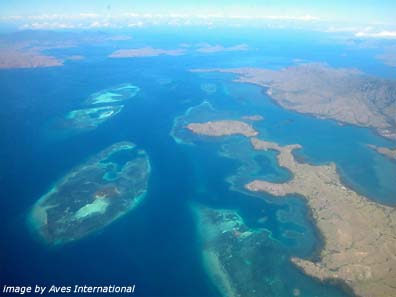
Travelling in the company of The Nature Conservancy Indonesia, we journeyed over miles and miles of sea.
I counted the hours by counting the many island chains that passed by.
I've never experienced this feeling before or since - but it actually came to the point where I started to crave dry land, and the sight of a few reassuring stands of forest.

Apart from the occasional palm-fringed beach that marked out tiny fishing communities on the coasts of some of these islands, there were hardly any trees to speak of. The vegetation that clothed these outcrops of land were low-lying scrub and exposed hillside savannahs of grass.
The only signs of life during this voyage were the occasional passing fishermen in their sturdy antique boats, and a few Crested Terns overhead. But we also had a surprise appearance by a pair of Finless Porpoise.

They kept company alongside us for a few minutes, before finally disappearing back into the fathomless blue waters of the Lesser Sundas.

Finally arriving in the cove of Komodo Island itself, I recall the incredible anticipation of actually setting foot on a land I've been reading about since I was old enough to read. This was going to be as close as I was ever going to get to my own personal Jurassic Park experience, and my expectations were obviously high...
Surrounded by a ring of mountains, first impressions of the island are tantalizing, giving a suggestion of something hidden, waiting to be discovered behind those imposing walls of volcanic rock.
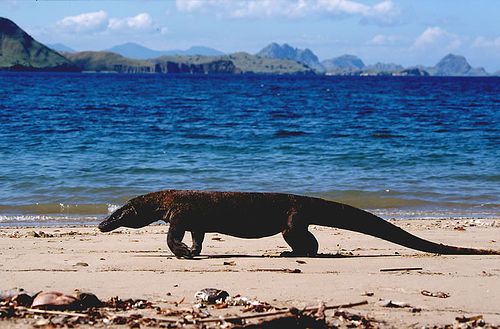
I had anticipated a long trek, hauling equipment through the hills before even catching a glimpse of the infamous Dragons. But before we could even unpack our gear at the ranger station, there was a monster waiting to greet us.

Strolling along the beach was the biggest, most impressive looking thing I have ever seen. Ambling along with almost regal nonchalance was a full-grown Komodo Dragon, Varanus komodoensis.

This adult didn't even look our way as we stood in awe a hundred metres or so away. More concerned with soaking up the afternoon Sun, and the off chance of finding something to eat along the tide line, it ambled along as if it had all the time in the world.

Now obviously we weren't the first crew to film dragons, and we're certainly not the last. And here is where the problem (at least for me) lay. Having grown accustomed to the comings and goings of film crews and nurturing a lucrative little tourist trade, the rangers had either knowingly or unintentionally habituated a group of dragons to their living quarters, kitchens and the nearby hostels rented for visitors.

So what did we meet while being introduced to the head warden, but a veritable herd of dragons, dozing beneath the shade of overhanging palms. This was far from what I expected. Rather than fabled killer reptiles with ancient blood running through their veins, we were presented instead with modern-day 'reptilian couch potatoes', looking overweight, overfed and under-excercised - even allowing a small herd of wild pig to tiptoe past them, the shame of it!

(I later found out that one of the largest specimens of V. komodoensis ever recorded, measuring in at over 10ft, was one of these dozing dragons. Well with a diet supplemented with kitchen scraps and who-knows-what, thats hardly a surprise anymore...)

Now I began to realize how film crews before ours had managed to capture such awesome closeups of the dragons. It could well have been just a case of, "Ok, let's just park the boat over here, set up camera on the beach over there, throw some chunks of meat around the place, have a cup of tea and a few sandwiches while the dragons plod over, shoot a few rolls, pack up and head back home."

Kind of demystifies the whole illusion of dangerous wildlife film-making doesn't it?

"I said 'smile' for the camera, not 'eat' the bloody thing"
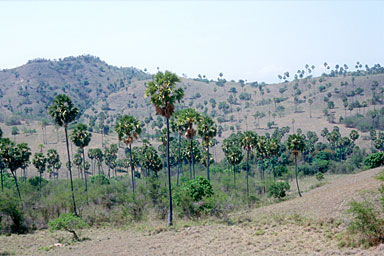
Well, not to be let down by this somewhat deflating encounter, it was up to me to find some real, wild dragons. And that's how I ended up on the neighbouring island of Rinca, and how my perceptions of this ancient predator were changed completely.

Will the real 'Jurassic Park' please stand up...
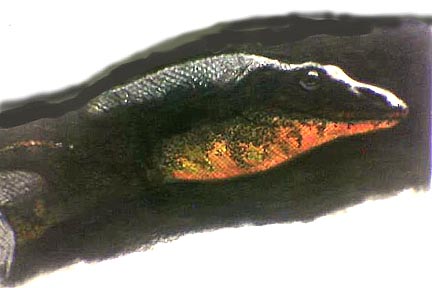
Rinca: its a 'dragon eat dragon' world out there
To be continued
......

Thursday, February 23, 2006

Loving the Lizard

As a precursor to another Field Journal entry - this time about my encounters with that giant among reptiles, the wonderfully adaptable monitor lizard, here's another piece of artwork I've been working on. Its a Clouded Monitor, Varanus bengalensis, in the undergrowth with a streak of sunlight catching it - undergrowth and streak yet to come...

Detail: 'Dawn Monitor' Charith Pelpola, 2006

Most of my encounters have been with the far more widespread Water Monitor, Varanus salvator, and its myriad subspecies spread throughout the region.

I was also privileged to spend some quality time with the grand-daddy of the clan, the infamous 'Dragon' out in Komodo. Field Journal coming soon!

Thursday, February 16, 2006

Field Journals: Asiatic Lions

One of the world's most endangered big cats - the beautiful Asiatic Lion - was once widespread from the Mediterranean to India. Today they number just around 300.
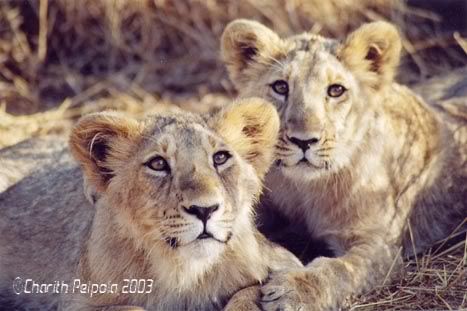
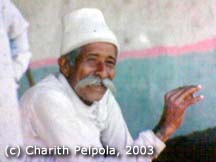
With such a small number of animals - representing the world's entire population - there are so many problems that have arisen for conservationists trying to rescue the species - not least of which is the tiny gene pool. Inbreeding has taken place at such a rate, that 80% of cubs die within the first year because of deformity and poor health.
I experienced this firsthand when I filmed out in the Gir Forest in Gujarat, West India a couple of years ago, for a documentary about the Lions and their relationship with the local tribal communities. Even though the Gir Forest itself is huge, covering an area of 1,400 square kiometres, its just a core zone of 260 square kilometres in which the lions are found. I found that out to my cost - when, after 3 days of tracking the length and breadth of this area, which is thick with dry forest and grassland - we still hadn't sighted a single lion.

Of course we had heard them roaring in the distance and come across a couple of old pugmarks - but not the animal itself. I was getting desperate, because we had run out of time and I even thought about changing the subject of the film to a story about the beautiful jackals (another favourite animal of mine!) that are found in the park.

It was literally on the last afternoon of the last day of filming that they suddenly appeared - a mother, her sister, and three 1-year old cubs - one male and two females. They had emerged from the tall grass to begin the night's hunt, and we found the cubs in a playful mood, rough-housing each other and their mother. But their aunt would have none of it and smacked the male several times with a warning snarl.

We were told by the trackers that the cubs' father was the dominant male of this area, but a younger male had challenged him recently and tried to separate the adult females from him. The oldtimer had been killed - directly as a result of the cramped territories that the males have to constantly fight over in the park. If the new male were to come across the cubs, he would kill them, so as to stimulate their mother to come into breeding condition again.

For their own safety, the cubs are monitored round-the-clock by a patrol of forest rangers, who try to keep the new male away. Healthy cubs are so rare these days, that they just can't afford to let 'nature take its course' anymore. They also told me that this particular mother had given birth to premature cubs before, so these three youngsters were very special.


When I photographed the two cubs below, resting after playtime, they were literally about ten feet away from our jeep (despite centuries of persecution, a strange thing about Asiatic Lions is that they are fearless around humans, and even curious about us).
The male is on the left; one of his sisters beside him. Its now been almost three years since I had this magical encounter - I can only hope that they made it to adulthood...


Having spoken at length with the game warden at Gir and representatives of the local tribal communities, namely the Maldhari and the Rabari herdsmen - I was given some interesting perspectives on the problem.
As far as the tribal communities are concerned, they've obviously had resentment against the lions in the past - the Maldhari were once nomadic herders, driving their livestock from one end of the forest to the other, following good grazing grounds during the changing seasons.

When the reserve was sanctioned, they were effectively prohibited from moving through the forests anymore. Many left Gir but a lot remained and were forced to settle down and become farmers.

Its these people whom I spoke with, and I got the impression that they were quite proud of the lions. They showed me the protective barricade of vicious-looking thornbushes build around their homes for protection. One farmer told me that one or two of his buffaloes are taken from time to time, but the lions were here long before him, so they have every right to do so. Of course he had a camera in front of him, and I always have to try and figure out if people are saying what they think I want to hear ('for the cameras'), or if they are saying what they really mean. But they seemed genuine enough. Maybe times have changed for some of these people.
Another Maldhari farmer recounted about the lions' fearless curiosity. As a child he recalled how two adult lions strolled into his village and just sat down, staying for an hour or so just watching the people going about their business - and then wandering back into the bush! Lion-hearted indeed!
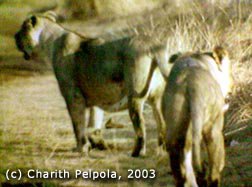
There were plans to move some of the cats from Gir to the Kuno Wildlife Sanctuary, 500 miles away.

This would give the species a much needed chance of diluting their gene pool, especially with future plans of reintroducing captive bred animals from Europe into the wild population.

When you consider that all 300 lions are descended from as few as a dozen individuals, its no surprise to learn that one lion is so genetically identical to another, that they could be identical twins.

As I write this, I also hear that a controversial new reintroduction and resettlement plan for the lions is being hammered into shape - shall post when I find out more.


Saturday, February 11, 2006

Field Journals: Sri Lankan Jackals

Jackals in South Asia are extremely shy creatures, absolute introverts when compared to their cousins in Africa.
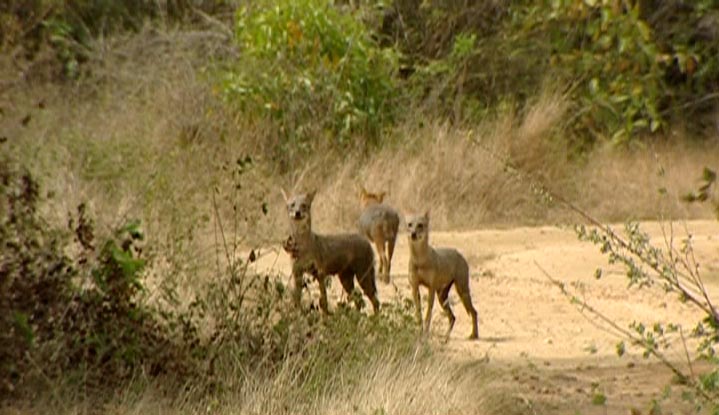
Although to all intents and purposes, the Asian jackal
is identical to Africa's Golden Jackal, both of which are classed as Canis aureus - there are significant differences in appearance and temperament.
In the decade I've spent filming wildlife around Asia, I've only seen wild Jackals six times - twice in India and the rest in Sri Lanka. And I've only managed to capture them on film on three of those occasions, (of course there have been many 2 or 3 second shots of Jackals racing across the frame and disappearing into the bush, but these obviously don't count). But we managed to film some excellent footage of Jackals late last year whilst working in the forests of Sri Lanka. The three jackals in the photo were part of a pack of seven who had just burst out of the bush, and stopped briefly on the dirt track to inspect our jeep. They then disappeared back into the undergrowth, only to re-appear moments later in an area of tall grassland.
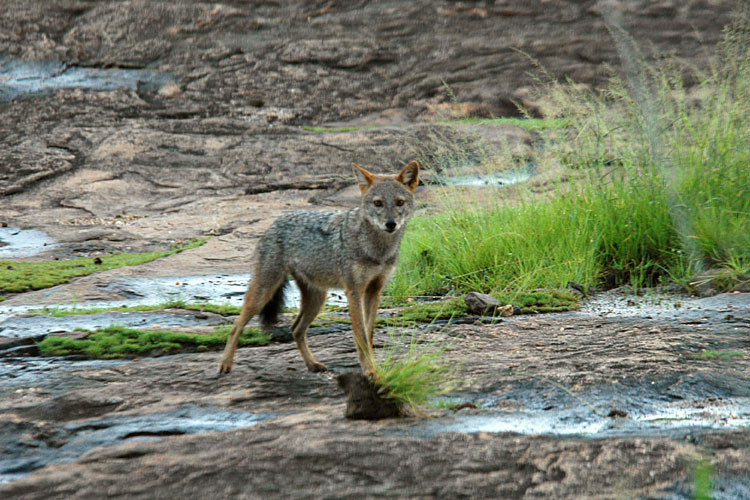
All seven proceeded to leap in huge jumps across the open savannah, and we figured they were all tracking prey that was hidden in the safety of the grasses. By bounding across the grassland like overgrown rabbits, they were not only covering distance quickly, but were also managing to get a better view of their prey while they were airbound - now that's clever.
Anyway we captured some great footage of this activity. The encounter lasted all of about 8 minutes or so - the longest I've ever spent in the company of wild Jackals!